
Most roadside breakdowns are preventable. Not all of them, but enough that a real 30-minute inspection before a long drive is worth the time, especially before a road trip where a problem means dealing with it far from home instead of a five-minute drive to your usual shop.
Tires: The Part That Actually Touches the Road
Tires cause more preventable breakdowns than almost anything else, and they're also the easiest thing to check yourself.
Tread Depth
Use a penny, insert it into the tread groove with Lincoln's head upside down. If you can see the top of his head, you're at or below 2/32 of an inch, the legal minimum, and the tire needs to be replaced before a long trip. For extra margin, especially if there's any chance of rain, use a quarter the same way. Seeing the top of Washington's head means you're at 4/32 or less, worth planning a replacement around soon even if it's not yet a hard legal issue.
Tire Pressure
Check pressure when the tires are cold, meaning the car hasn't been driven that day or has sat for a few hours. Use the number printed on the sticker inside your driver's door jamb, not the number on the tire's sidewall, which is the tire's maximum rating, not your vehicle's recommended pressure. Underinflated tires run hotter at highway speed and are more prone to a blowout, which is exactly the failure you don't want two hours from home.
Sidewalls and the Spare
Run your hand along the tread and sidewalls feeling for embedded nails or screws, and look for cracks or bulges. Don't skip the spare. A flat spare is no spare at all, and it's an easy thing to forget about until you actually need it.
Fluids: Your Car's Actual Lifeblood
A quick fluid check catches problems while they're still cheap to fix.
Engine Oil
Check the dipstick on level ground with the engine off. Top off if it's below the minimum mark, and take note if the oil looks unusually dark or gritty, that's worth mentioning at your next service even if the level itself is fine.
Coolant, Brake Fluid, and Washer Fluid
Check coolant only when the engine is cool, never open a hot radiator cap. Brake fluid should sit between the min and max lines on the reservoir. Washer fluid seems minor until you're following a salt truck with no way to clear your windshield.
Battery, Lights, and Wipers
A battery that's starting to weaken often shows no symptoms at all until the one cold morning it finally doesn't have enough left to start the car. If your battery is a few years old or you've noticed slower cranking, it's worth having it tested rather than assuming it'll be fine for the trip. Walk around the car and confirm every light works, headlights, brake lights, turn signals, and check your wiper blades for cracking or a streaky wipe, which usually means they're due for replacement.
Why This Matters More Before a Long Auburn Drive
A short local trip gives you options if something goes wrong, you're never far from help. A long highway drive doesn't offer the same safety net, and Central New York's weather can turn a minor issue into a real problem fast, whether that's summer heat stressing an aging battery or a winter storm turning worn tires into a serious hazard. The inspection takes half an hour. A roadside breakdown costs a lot more than that.
Why Sholar Automotive for Your Pre-Trip Check
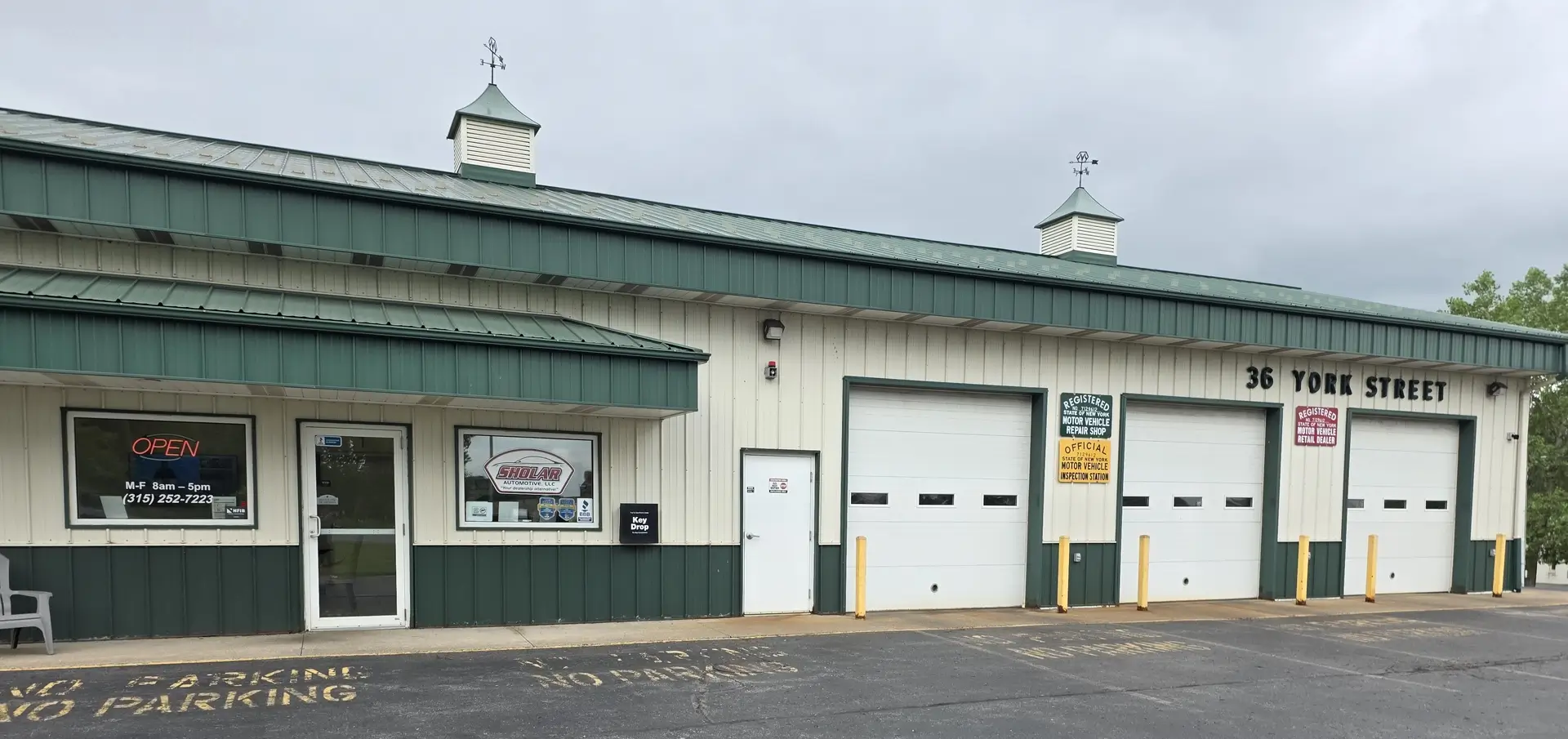
If you'd rather have a second set of eyes before a big trip, we're happy to run through tires, fluids, brakes, and battery in one visit and tell you honestly what's fine and what's worth addressing first. This overlaps with our regular preventative maintenance service, and if your NYS inspection sticker is getting close to its due date anyway, it's worth combining the two into one visit. More on that on our NYS inspection page.
Heading out on a long drive soon? Give us a call at (315) 252-7223 or schedule online, and we'll make sure your car is actually ready for it.